
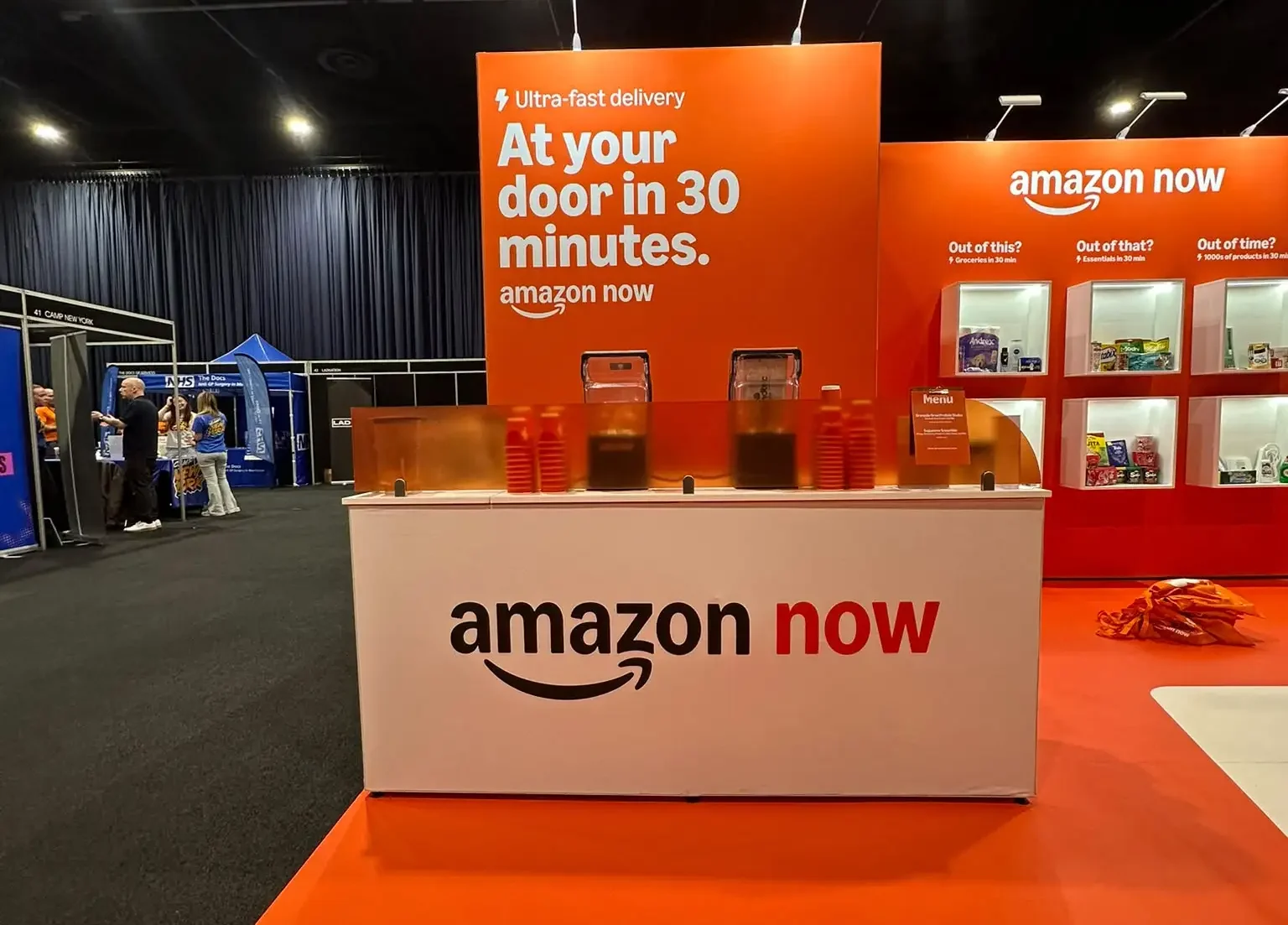
Smoothies have fast become one of the most requested catering additions at corporate events across the UK, and the format is now firmly established across conferences, exhibitions, wellness days, and brand activations. The demand continues to grow as more event planners are looking for catering options that reflect the health-conscious expectations of their guests.
But the popularity of the format does not automatically translate into accurate planning. How many smoothies you actually need at a corporate event is a different question from how many guests are attending, and getting the estimate wrong can end up creating real problems in both directions. Too few and the service runs short before every guest has been served. Too many and you have over-ordered on ingredients, over-staffed the bar, and spent more than the event required.
This guide gives event planners a practical framework for estimating smoothie quantities by event type, covers the key variables that affect consumption, and explains what to share with your provider to ensure the service is planned as accurately as possible from the outset.
Unlike coffee, where guests will typically return to the barista bar several times across a single day, most guests will only have one smoothie per visit. The key planning variable is therefore not repeat visits but take-up rate: what proportion of guests will choose a smoothie at all.
This will vary depending on the type of event, whether other drinks are available alongside the smoothie bar, and the profile of the audience. A wellness day where the smoothie bar is the main refreshment choice will naturally see higher engagement than a conference where coffee, tea, and hot chocolate are also available. Understanding which scenario applies to your event is the starting point for any accurate quantity estimate.
The estimates below are based on our operational experience across a broad range of UK corporate events and are intended as planning benchmarks rather than fixed guaranteed figures. Guest behaviour will vary depending on the audience, the event format, and the factors covered in the next section.
| Event Type | Estimated Smoothies Per Person |
|---|---|
| Morning-only session (up to 3 hours) | 1 – 1.5 |
| Half-day event (3 – 5 hours) | 1.5 |
| Full-day conference or event (6 hours or more) | 1.5 – 2 |
| Employee wellness day or team away day | 1.5 – 2 per day |
| Exhibition stand or brand activation | 1 – 1.5 |
| Office activation (single session) | 1.5 |
We recommend always planning to the upper end of the range for your event type. The buffer accounts for the occasional dropped drink, guests who return for a second, and the natural variation in demand that is difficult to predict precisely in advance. For a half-day conference with 100 guests, planning for around 150 smoothies rather than 100 is a sensible working figure. For a full-day wellness event with the same guest count, planning for up to 200 - 250 will ensure the service can run comfortably throughout without the risk of running short.
These figures assume a single smoothie bar. For events where guest numbers are higher, or the service window is concentrated into a short break period, the staffing and output configuration matter just as much as the ingredients quantity. Both need to be planned carefully together.
The single biggest influence on smoothie consumption at a corporate event is whether there are other drinks available alongside it. When guests have a choice of refreshments, they will self-select based on preference, and some will not visit the smoothie bar at all. When a smoothie bar is the primary or only refreshment offering, take-up will be consistently higher. Understanding the full catering picture for the event is absolutely essential before settling on a quantity estimate.
Smoothies perform consistently across different parts of the day, which makes them a more flexible option than hot drinks at longer events. Morning sessions see strong take-up as guests arrive, but midday and afternoon windows also generate solid demand, particularly at longer events where guests are looking for something lighter and more refreshing as their energy levels naturally start to dip.
What does affect demand is the structure of the serving window. A concentrated 20-minute break window during a conference will see a different demand pattern than a 90-minute open networking session. In a short break, guests have limited time, and some will prioritise other activities. In an open networking window, guests approach the bar at their own pace and overall take-up across the session tends to be higher.
The profile of event attendees can also have a measurable effect on smoothie take-up. Audiences with a younger demographic profile, or those attending an event with an explicit wellness or health focus, tend to consistently show higher engagement with a smoothie bar than a more mixed or senior corporate audience at a standard conference. If you know your audience well, factor their likely appetite for a health-focused refreshment into your estimate rather than defaulting to a standard benchmark.
Events where guests have a choice of two or three flavour options typically see higher take-up than those offering a single blend. Menu variety is what encourages engagement with your brand and gives guests who might not be drawn to one flavour a reason to visit the bar. If menu options are being discussed with your provider, building in at least two distinct flavour profiles alongside dairy-free alternatives is a reliable way to broaden the appeal and support a higher overall take-up rate.
A smoothie bar that clearly offers plant-based and allergen-conscious options from the outset removes the barrier for guests who would otherwise skip it entirely due to dietary uncertainty. This is not a minor consideration: at most UK corporate events, a meaningful proportion of guests will have dairy-free requirements, and ensuring the bar communicates its dietary range clearly not only promotes inclusivity, but it will also confidently support a higher overall take-up rate.
A professionally staffed smoothie bar gives you the most flexibility on the day of your event. An experienced team will monitor smoothie consumption throughout the service window and be able to adjust blend volumes in response to demand, and flag to the event organiser if quantities are tracking above or below expectations. For event planners, this translates into greater reliability and a catering service that is able to adapt to your guests rather than running to a fixed plan regardless of what is happening at the bar.
It also generates more useful data for future events. A well-run smoothie bar hire service can report on actual drinks served, flavour preferences, and peak demand periods, making planning for your next event of a similar format considerably more straightforward.
For events where guests are spread across the day or working to a hybrid schedule, branded bottled smoothies will also work particularly well alongside a live bar. Bottles can be prepared in advance, placed on desks or handed out at the door, and ensure every guest receives something regardless of whether they visit the bar directly. The two formats complement each other well and give you more ways to reach the full guest list without any additional complexity on the day.


The estimate your provider gives you is only as accurate as the information it is based on. The most useful details we recommend confirming at the enquiry stage are:
Even a broad estimate is more useful than a headcount withheld until close to the event. Staffing, ingredients, and bar configuration are all planned around headcount.
Whether the event is a morning session, a full day, a multi-day, or a wellness activation makes a significant difference to the planning benchmarks. Break timings and their duration will have an effect on how demand is distributed across the entire service window.
Whether other drinks are also being served alongside the smoothie bar affects take-up directly. Sharing this information upfront will allow for the quantity estimate to reflect the actual competition for refreshment demand rather than treating the smoothie bar in isolation.
If you have a clear sense of your attendees’ demographics or wellness orientation, sharing this context will help your provider calibrate the estimate more accurately than a standard headcount calculation alone.
If you have a preference for specific flavour profiles, functional ingredients, or dietary requirements, confirming these at the point of enquiry ensures ingredient planning reflects the actual menu rather than a default blend selection.
Getting smoothie quantities right at a corporate event is not just a catering logistics question. It directly affects how the service runs on the day: whether the bar runs short, whether the team is over- or under-staffed for the demand, and whether the overall guest experience delivers what the event requires.
The planning benchmarks in this guide give a solid starting point. Apply them to your event format, factor in the variables most relevant to your audience and schedule, and brief your provider with as much context as possible. A well-planned smoothie bar hire service should arrive at the event knowing exactly what it needs to deliver, without any of the guesswork on the day.
If you are planning a corporate event and want to explore how a smoothie bar hire service from The Rolling Bean could work for your guest numbers and format, get in touch with our team today to start the conversation.
As a general guide, one professional barista running a smoothie bar can serve around 50 to 60 smoothies per hour on a streamlined two- to three-option menu with ingredients already prepped in advance. This is slightly lower than a coffee bar output, reflecting the additional preparation involved in blending fresh ingredients to order. For events with larger guest numbers or a concentrated break period where most guests arrive at the bar simultaneously, discussing staffing levels with your provider at the point of enquiry ensures the service is configured to handle peak demand rather than adjusted reactively on the day.
Yes, meaningfully so. When the smoothie bar is the sole refreshment option at your event, consumption will naturally be higher than at an event where guests can choose between multiple drink formats. In this scenario, we recommend that you plan to the upper end of the quantity range for your event type, as this is particularly important, and your provider should be made aware that no alternative drinks are available so staffing and ingredient volumes can be calibrated accordingly.
This is worth discussing with your provider at the planning stage. A professionally run smoothie bar hire service will typically plan ingredient quantities with a sensible buffer already built in, but significant over-ordering can result in product waste. Sharing as much detail as possible about your event format, audience profile, and any alternative refreshments being served helps your provider arrive with the right volumes rather than defaulting to a conservative over-estimate across the board.
To a degree, yes, but this depends on what the provider has brought with them. A staffed smoothie bar team will monitor consumption throughout the event and can adjust pace and portion size to extend the service if needed, but additional ingredients are unlikely to be sourced mid-event. This is one of the strongest reasons to plan to the upper end of the quantity range from the outset rather than assuming demand can always be met reactively if it exceeds expectations.
It can, particularly for outdoor or semi-outdoor events. Smoothies are popular year-round at indoor corporate events, but at outdoor activations during warmer months, demand tends to be slightly higher as guests tend to naturally gravitate towards cold, refreshing drinks. For outdoor summer events, planning generously and discussing seasonal demand patterns with your provider at the briefing stage is a sensible precaution we recommend you take.



