

When event planners ask about coffee bar hire for a conference or corporate event, the conversation almost always starts with two questions: how many drinks do we need, and how many people are coming? Both are the right questions. But there is a third question that determines whether the service actually works on the day, and it rarely gets asked early enough.
That question is: how fast can a barista actually serve?
Knowing the total number of drinks your event requires is useful, but knowing the serving rate that a single barista can sustain under busy event conditions is what will determine whether your guests spend three minutes collecting a coffee or fifteen minutes waiting in a queue. These are different calculations, and they serve different purposes, and conflating them is the most common planning mistake in corporate event coffee service.
In this guide, we will answer the serving rate question with a specific, usable figure and show you how to apply it to your own guest numbers and service window to calculate the staffing your event actually needs.
Based on our experience delivering coffee bar hire services across hundreds of corporate events in the UK, a professional barista operating a commercial espresso machine can comfortably serve between 60 and 80 drinks per hour under busy event conditions. For planning purposes, 80 drinks per hour is the most useful working figure as it represents what an experienced barista on a commercial setup can sustain with a streamlined corporate menu under steady, continuous service conditions.
It is worth being clear about what this figure accounts for: the full service cycle of an espresso-based drink, which includes grinding, dosing, tamping, pulling the shot, steaming milk, and handing over, alongside the natural rhythm of a queue where guests are arriving in a continuous flow rather than all at once. Planning against 80 drinks an hour per barista will help to build in a realistic margin for the minor variables that affect every live event: a guest who takes a moment to decide, a milk option that needs attention between drinks, or a brief interaction during a busy service window. Planning to the top of the range and then discovering the service cannot sustain it under pressure is a more costly problem than building in a sensible buffer from the start.
The 80 drinks per hour figure applies to steady, continuous service. What it does not account for is the concentrated demand spike that defines most corporate event coffee services and which is the single most important factor in getting staffing right.
At a conference with a structured 20-minute morning break, a significant proportion of the room, often the majority of attendees, arrives at the bar within the first half of the break rather than evenly across the full service window. That intense demand is what creates queues, and it is what the 80 drinks per hour figure on its own cannot resolve.
During a concentrated peak demand window, output falls towards the lower end of the 60 to 80 range. The rhythm of service is disrupted by the volume and pace of arrivals when a large group reaches the bar in a short window, and it is at precisely this moment that under-staffed services become visible to every guest in the room.
This is the most important distinction in barista staffing planning: the question is not how many drinks your barista can serve across the full service window, but how many they can serve during the critical peak period when the majority of your guests arrive at once. For structured break formats, that means planning against 60 drinks per hour per barista, not 80, to provide a safe buffer.
Armed with the 60 to 80 drinks per hour range and an understanding of peak demand behaviour, the staffing calculation for any event becomes straightforward.
Start with two inputs:
Using the planning benchmarks from our guide to how many coffees you need at a corporate event, approximately 85% of guests during a morning session, dropping to around 45% in the afternoon, calculate the number of drinks expected during each window, not across the whole event.
A 20-minute structured conference break creates fundamentally different demand pressure to a 90-minute arrival and networking session. For structured breaks where demand is concentrated into a short window, use 60 drinks per hour per barista as your planning figure. For open-flow networking sessions where guests arrive gradually, 80 drinks per hour per barista is the appropriate benchmark.
Divide your expected drinks for the window by the relevant figure: 60 for structured breaks, 80 for open-flow sessions, and the result will give you a rough idea of the minimum number of baristas needed to keep the queue moving without guests waiting an unreasonable length of time.
The table below applies this to the most common corporate event formats we see:
| Event Format | Guest Count | Expected Drinks | Planning Rate | Baristas Needed |
|---|---|---|---|---|
| Morning conference break (20 mins) | 100 guests | 85 drinks | 60/hr (peak) | 2 |
| Morning conference break (20 mins) | 200 guests | 170 drinks | 60/hr (peak) | 3 |
| Morning conference break (20 mins) | 300 guests | 255 drinks | 60/hr (peak) | 5 |
| Networking/arrival session (90 mins) | 100 guests | 85 drinks | 80/hr (steady) | 1-2 |
| Networking/arrival session (90 mins) | 200 guests | 170 drinks | 80/hr (steady) | 2-3 |
| Full-day conference, multiple breaks | 150 guests | 80 drinks per break | 60/hr (peak) | 2 |
The structured break format consistently requires more baristas per guest than the open networking format because demand is concentrated rather than distributed. This is where under-staffed coffee services most commonly create problems and where the difference between one and two baristas is felt most directly by guests.
The rule of thumb is simple: if your expected drinks for a structured break window exceed what one barista can serve at 60 drinks per hour, add a second barista.
If your guest count exceeds 200 and the service window is a structured break of 20 minutes or less, plan for a minimum of three baristas from the outset rather than trying to manage it with two and scaling up reactively.
For events where guests are spread across multiple floors, separate rooms, or different zones of a building, which is common at large exhibitions, a second bar positioned closer to the secondary audience is almost always more effective than adding a third barista to a single bar. Two bars with one or two baristas each consistently outperform one bar with three baristas in terms of queue distribution and perceived service speed.
September and October are the busiest months in the UK corporate conference calendar. According to Imago Venues, September is consistently one of the most popular months for conferences in the UK, with October following close behind as industry summits, leadership events, and networking occasions continue into the final quarter of the year.
The numbers in the table above translate into a very tangible difference in guest experience, and it is worth being specific about what that looks like in practice.
With one barista and 80 guests arriving during a 20-minute morning break, the service is operating at its absolute limit from the moment the break begins. There is no buffer for the natural compression of demand that happens when a room empties at once, the queue builds immediately, wait times extend quickly, and guests at the back begin calculating whether there is enough time to wait. Some will not bother. That is a portion of your audience the coffee service has quietly failed, and it will be noticed even if nobody says anything.
With two baristas serving the same 80 guests in the same window, the pressure is distributed, the queue moves at a pace that feels manageable, and guests collect their drink and return to their seat with time to spare. The service is invisible in the best possible way as it happens around the event rather than disrupting it.
That is the standard a well-staffed professional coffee bar hire service should meet. Not zero queue; some queue is natural and even social at a well-run event, but a queue that moves consistently and does not leave guests feeling the service is letting the event down.


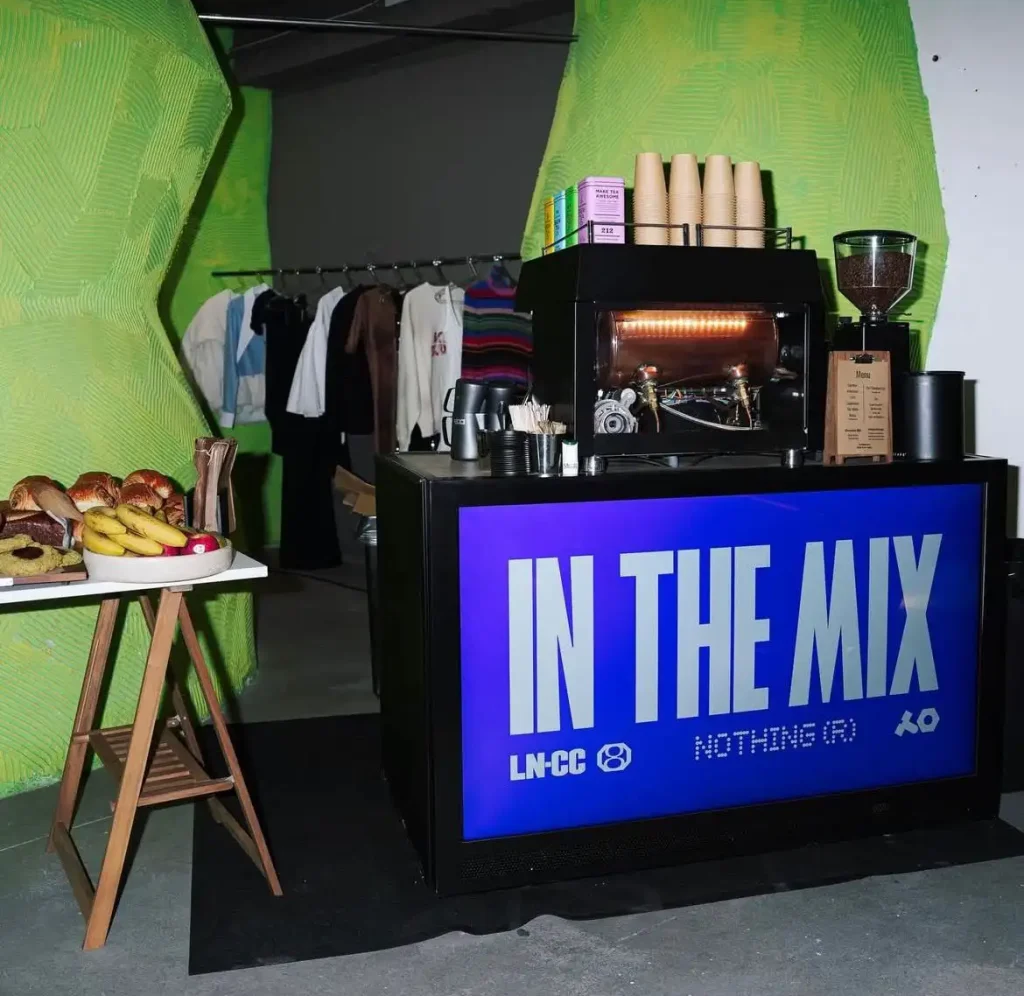


The staffing calculation above is only as accurate as the inputs it is built on. Sharing the following information with your coffee bar hire provider at the point of enquiry allows them to apply the formula to your specific event rather than defaulting to a standard configuration that may not fit:
The more precisely these variables are described, the more accurately the staffing recommendation will reflect what your event actually needs, rather than what a comparable event of similar size typically requires.
A coffee bar with the right equipment and the right beans will still create a queue if it is not staffed to handle the volume and pace of your specific event. Staffing is not a secondary consideration in event coffee service planning; it is the primary one.
The 60 to 80 drinks per hour range is your starting point. Apply the right end of that range to your service window type: 60 for structured breaks, 80 for open-flow sessions, and the staffing picture becomes clear before anyone has arrived on the day.
If you're planning a conference or corporate event this autumn and want to explore how a professionally staffed coffee bar hire service from The Rolling Bean could work for your format and guest numbers, get in touch with our team today to start the conversation.
Yes, and it is one of the most overlooked variables in barista staffing planning. Plant-based milks, particularly oat milk, behave differently under heat and often require more careful technique than dairy, which naturally slows output in a high-volume environment. This is not a reason to limit milk options, but it is worth raising with your provider at the point of enquiry so it can be factored into staffing from the outset rather than discovered as a pressure point on the day.
It can. A streamlined menu of four to five core drinks allows a barista to develop a consistent, efficient rhythm that maximises output. A more extensive menu adds decision time at the point of order and preparation complexity behind the bar, both of which reduce throughput. For corporate events where speed and consistency are the priority, a focused menu is almost always the better choice, and discussing options with your provider at the planning stage allows them to advise on what can be delivered at volume without compromising pace.
A single bar with more baristas produces more drinks per hour in absolute terms, but it concentrates all guests into one queue in one location. Two bars distributed across the event space distribute both the queue and the perception of waiting, making the service feel more accessible regardless of where a guest is standing. For events spanning a large room, multiple rooms, or more than one floor, the second bar almost always produces a better guest experience than adding another barista to a single point of service.
The first ten minutes of a structured break is always the most critical window to plan for. Demand is at its highest, the queue forms fastest, and the output-versus-demand tension is most acute. Once the initial rush clears, the service settles into a steadier rhythm that is easier to sustain. Providers with genuine corporate event experience will structure their staffing specifically around that opening window rather than planning for an average across the full break.
Yes, and the logic is different from a standard throughput calculation. At a VIP or client entertainment occasion, the interaction at the coffee bar is part of the experience rather than a functional transaction. A higher barista-to-guest ratio than pure volume calculations would reduce queue pressure entirely, allow for more considered drink preparation, and give the team space to engage with guests properly. If your event has a hospitality dimension, raise this with your provider at the planning stage so staffing reflects the experience you are trying to create.



