
The role of live events in brand marketing has shifted considerably in recent years, and the data reflects it. The IPA Bellwether Report recorded events as the leading category for increased marketing investment in both Q1 and Q2 of 2026, with a net balance of +14.7% in Q1 and +11.0% in Q2, the highest growth of any marketing channel across both periods. Qualitative evidence from the same report also shows that UK marketing executives are increasingly focused on targeted, direct audience engagement rather than broad-reach advertising, and roadshows are one of the primary formats delivering that.
A well-executed nationwide roadshow takes a brand directly to its audience across multiple cities, creating a consistent, repeated experience that a single event simply cannot replicate. It generates strong regional presence, builds relationships in markets that might otherwise receive little direct attention, and creates a sustained brand campaign narrative that extends over weeks rather than days.
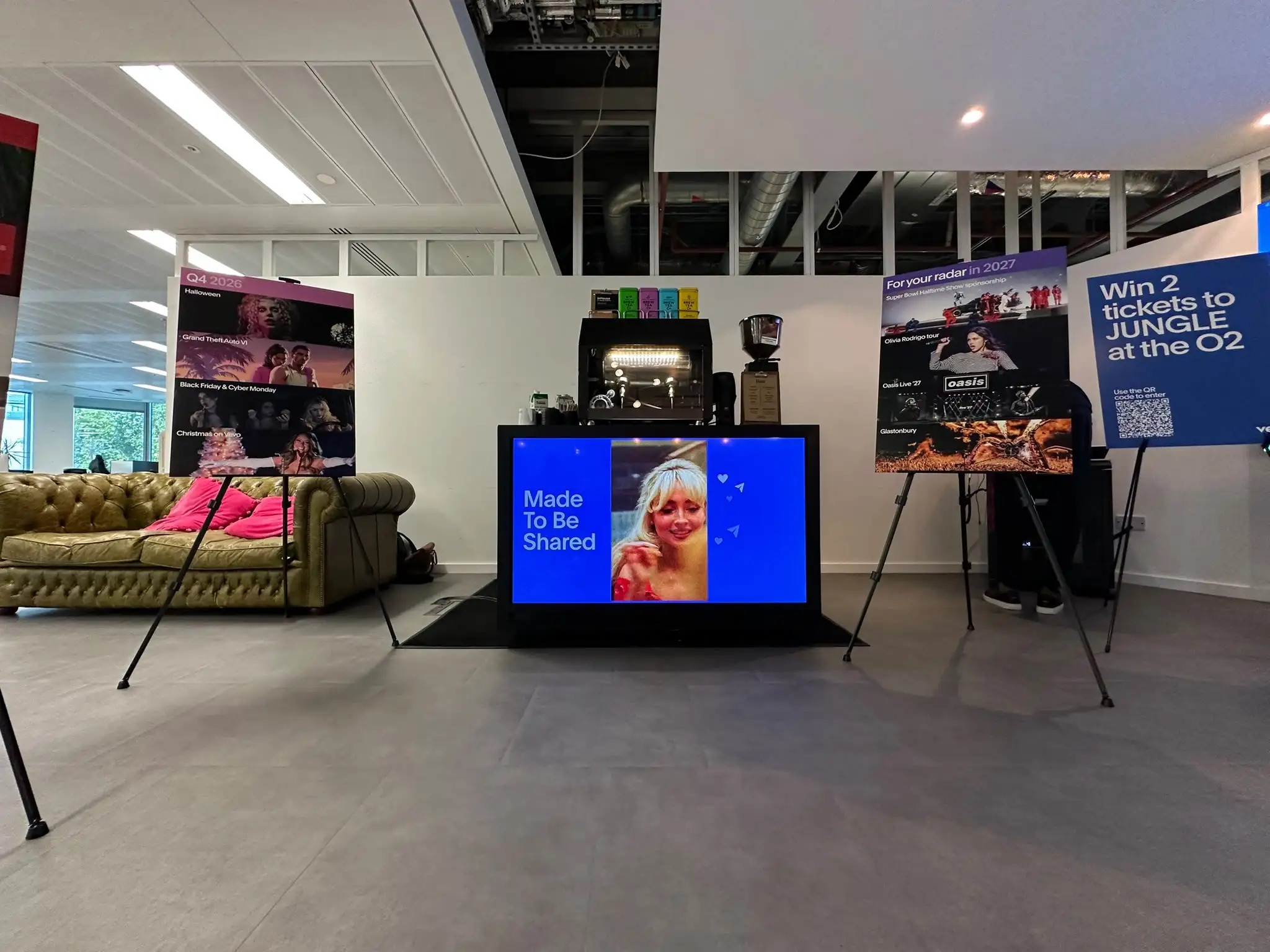
Coffee bar hire is one of the most requested additions to roadshow activations. It gives each stop a warmth and hospitality quality that draws people in, creates a natural gathering point, and carries a branded presence across every drink served. But planning a coffee cart hire service for a multi-city tour is a meaningfully different exercise than booking one for a single event or activation. The logistics are more complex, the consistency demands are higher, and the planning decisions made early have a compounding effect across every stop on the route.
This guide covers what large brands and their event planning teams need to thoroughly think through before briefing a roadshow coffee service provider.
A single corporate event has one venue, one team, and one set of logistics to manage. A nationwide roadshow multiplies every one of those variables by the number of stops on the schedule, and introduces challenges that simply do not exist at a standalone event: equipment movement between cities, staffing consistency across different locations, variable venue access conditions, and the sustained operational pressure of delivering the same quality at stop ten as you did at stop one.
For any brand commissioning a multi-city tour, the guest experience at each location is measured against the same standard regardless of where it falls in the schedule. A coffee service that degrades in quality, branding, or speed across a multi-week tour will then reflect on the wider campaign. Getting the planning right from the outset, with a provider who genuinely understands what a touring brief involves, is what prevents that.
A professional mobile coffee bar is built to travel, but the practical questions around how it moves from city to city still need some clear answers before the tour begins. How does equipment move between stops? Who manages transport, and is it included within the quote? What is the realistic setup time at each venue given the travel schedule between consecutive stops?
Venue access conditions typically change across every location too. Loading bay arrangements, vehicle access restrictions, floor levels, lift specifications, and contractor access windows all vary and cannot be assumed on a ‘one-size-fits-all’ approach. Each stop needs to be assessed individually. Sharing confirmed venue details with your provider as each location is locked in, rather than all at once, will give them the time they need to plan access logistics properly for every stop.
Power access is worth confirming at each venue too. In touring environments including shopping centres, pop-up spaces, and outdoor activations, the proximity of power points varies considerably. An experienced provider will bring their own power supply solution where needed, but only if the conversation has happened before the team arrives onsite.
For a coffee bar hire service, brand consistency means the same visual identity at every location: the same bar presentation, the same branded cups and serving materials, the same uniforms, and the same menu. Variation between stops, however minor they are, will be noticed and reflect on the wider campaign.
The most reliable way to maintain consistency across every stop is to confirm that all branded materials are produced centrally and travel with the equipment rather than being sourced locally at each stop. Artwork should be approved and materials produced before the tour even begins, not updated between dates and stops. Production lead times for branded elements will need to be built into the wider tour timeline from the very start.
Service quality across a roadshow is shaped almost entirely by the team operating it. A core team who have worked together across multiple events, know the setup well, and understand the rhythm of a touring schedule will deliver more consistent results than a team assembled from different local sources at each stop.
When briefing a roadshow coffee provider, ask specifically about their staffing approach for touring engagements. Whether the same core team travels with the tour, and how additional local support is managed at larger stops, are two of the most useful questions to raise before committing.
Roadshow scheduling requires planning for the cumulative demands of the full tour, not just each stop in isolation. A team operating across a six-stop, three-week roadshow needs a staffing and scheduling plan that accounts for travel time, rest, and operational continuity across the whole period.
Service windows also differ at every stop. A shopping centre pop-up running across a full weekend has different demand characteristics from a trade partner breakfast on a Thursday morning. Staffing and stock volumes need to be calibrated for each individual stop, not sized uniformly across the tour.


The more complete the brief at the first conversation, the more accurate and effective the service can be planned end to end. The essentials to confirm upfront are:
Sharing all of this information progressively as each stop is confirmed is significantly better than presenting it all at once close to the start date.
Not all coffee bar hire service providers have the infrastructure or experience to deliver consistently across a multi-city touring schedule. The clearest indicators of a provider who can are:
Vagueness on any of the above points at the quoting stage is a reliable signal of how the tour will run.
The brands that get the most from a touring coffee bar hire service are the ones who bring a complete brief to the first conversation, engage a provider with genuine touring experience, and treat the coffee service as an integrated part of the campaign plan from the start.
If you are planning a nationwide roadshow and want to explore how a mobile coffee bar service could work across your tour schedule, get in touch with The Rolling Bean today for a UK-wide quote.
As a general guide, a nationwide roadshow with four or more stops should be booked a minimum of ten to fourteen weeks before the first tour date, compared to the four to eight weeks typically sufficient for a single corporate event or activation. The additional lead time allows the provider to account for equipment and logistics planning across multiple locations, branded material production for the full tour, staffing coordination across consecutive stops, and venue access confirmation at each site. The earlier the full schedule is confirmed and shared with your chosen provider, the more effectively the tour can be planned as a single coordinated operation rather than a series of separate bookings.
It can, but keeping the menu consistent across all stops is almost always the stronger operational and brand choice. A uniform menu allows ingredients to be sourced and restocked predictably, reduces the risk of service inconsistencies between locations, and ensures the guest experience feels like part of the same campaign no matter what city it is in. Where a stop-specific variation is genuinely needed, for example, a different audience profile or a venue with specific catering restrictions, raising this at the briefing stage allows it to be planned for properly rather than accommodated on the day.
Some venues, particularly shopping centres, exhibition halls, and managed event spaces, require external catering suppliers to submit documentation including public liability insurance and food hygiene certification before access is granted. An experienced roadshow provider will have this documentation on hand and be familiar with the submission process at major UK venues. Raising each venue on the route with your provider as it is confirmed, rather than assuming access will be straightforward, allows any restrictions to be identified and resolved in advance rather than on the day of the stop.
A professional roadshow provider will plan ingredient restocking at each stop as part of the overall tour logistics rather than treating it as a separate task to be managed on arrival. This typically involves confirming local sourcing options in each city in advance, or transporting sufficient stock to cover stops where local sourcing cannot be guaranteed to the required standard. Coffee quality and milk consistency are the two variables most likely to drift if restocking is not planned carefully, so asking your provider specifically how they manage this across the tour is a useful way to gauge their touring experience.
In most cases, yes, provided sufficient notice is given. Adding a stop typically requires the same lead time as an individual booking for that location, covering logistics planning, staffing confirmation, and any venue-specific access requirements. Removing a stop may be subject to the provider’s cancellation terms depending on how close to the date the change is made and what preparation has already been completed for that location. Discussing schedule flexibility at the point of booking, and understanding what notice periods apply to additions and changes, is worth confirming before the tour contract is finalised.



