
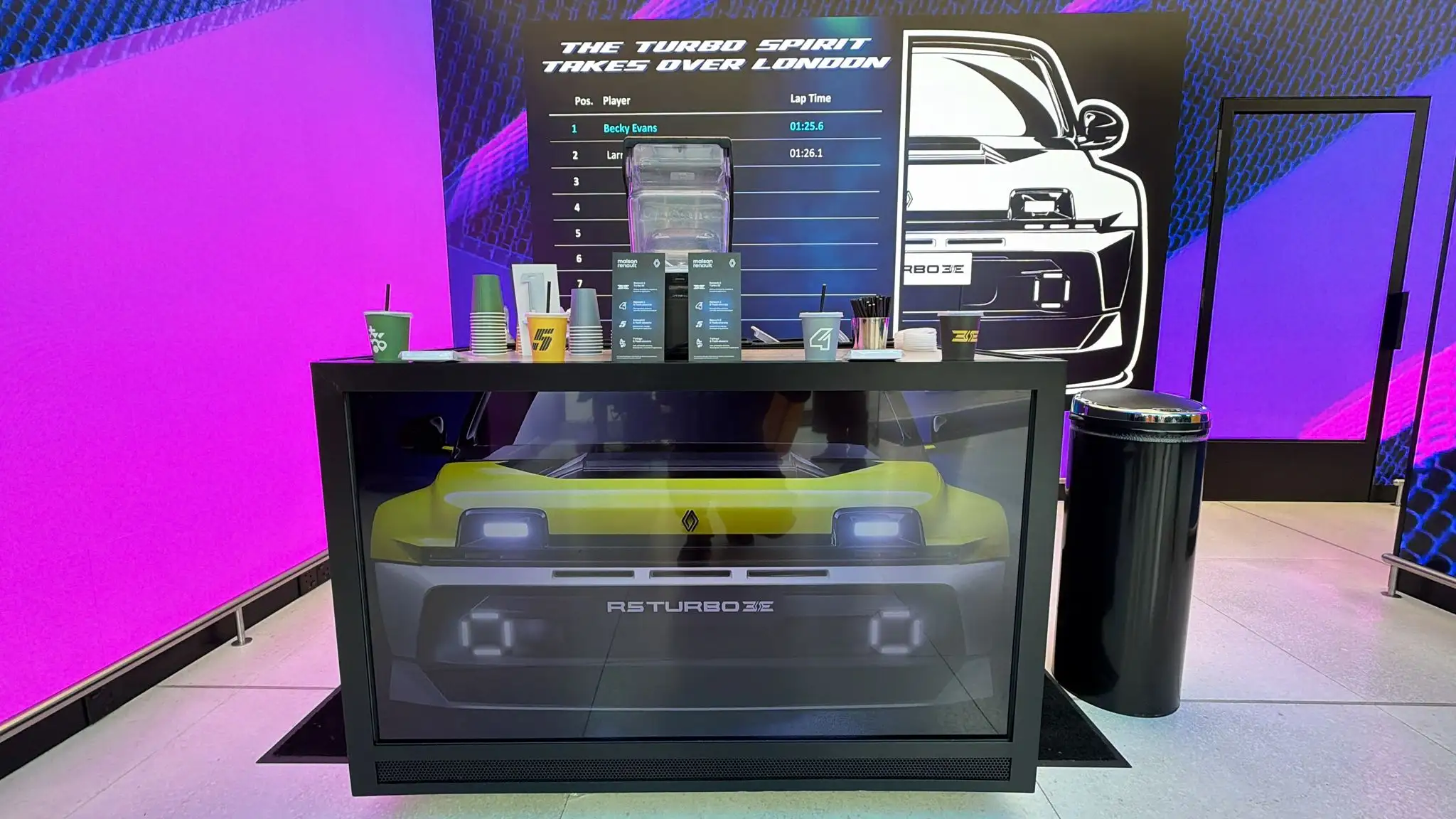
Smoothie carts have become one of the most requested additions to corporate events, office wellness days, exhibitions, and brand activations across the UK. They're visually striking, naturally interactive, and offer guests something genuinely refreshing that feels considered rather than an afterthought.
But one question comes up time and again when event planners start exploring smoothie cart hire: how early do you actually need to book?
The honest answer depends on several factors: your event size, the time of year, your location, and whether you want any branded elements included in your setup. What stays consistent, however, is that booking earlier almost always puts your brand in a stronger position. In this guide, we will break down everything you need to know about smoothie cart hire lead times, so you can plan with confidence and avoid any unnecessary last-minute pressure or delays.
It's easy to assume that a smoothie cart is a straightforward event add-on that can be arranged closer to the event date. In reality, professional smoothie cart hire involves trained staff, specialist blending equipment, ingredient sourcing, arranging travel logistics, and setup planning, none of which can be pulled together overnight.
The UK smoothie and juice bar market is also starting to grow at a rapid pace. According to IBISWorld, the sector's revenue is estimated to grow at a compound annual rate of 10.9%, reaching £106.8 million in 2026, driven by growing health consciousness and the demand for premium, on-trend beverages at corporate events and in the workplace. That level of growth means competition for the best providers is increasing, and availability windows are getting even tighter.
Corporate event volumes are also rising. A 2026 industry report from Conference News found that the global corporate events market is set to almost double to £441 billion by 2029, with 66% of event planners already outsourcing at least part of their event management to specialist suppliers. As demand for premium event experiences continues to grow, so does competition for quality service providers.
In short, the best smoothie cart hire services are often booked well in advance, particularly during peak corporate event season.
Booking timelines for smoothie cart hire will vary depending on the scale, format, and complexity of your event. We’ve created the following timelines as a practical guide based on the kind of events where smoothie carts most commonly feature:
Events with high guest numbers, structured break schedules, or multi-day service requirements will almost always require the most preparation. Staffing, equipment allocation, ingredient volumes, and logistics will all need to be planned carefully in advance to ensure the service runs smoothly under pressure.
These events will, more often than not, include branded elements such as custom cups, bar wraps, digital display bars, or branded uniforms, which will require additional design and production time before the event. Allowing a minimum of 4 to 8 weeks will give providers the time needed to deliver a polished, on-brand setup.
Internal events are usually smaller in scale and require less complex logistics, but this doesn't mean last-minute bookings will always be guaranteed. Popular dates and smaller providers can still fill up quickly, so early enquiries are still encouraged.
Depending on the event location, provider availability, and whether any additional branding is required, shorter lead times can occasionally be accommodated. However, this is not guaranteed, and your options may be more limited at this stage.
These timelines are a minimum guide, not a guarantee of availability. As a general rule, the earlier you enquire, the more flexibility you have over the bar size, staffing levels, branding, and service structure.


Beyond the event type itself, several other factors can influence how much lead time your smoothie cart hire company requires. Understanding these factors early in your event planning process will make a significant difference to how the service comes together on the day.
Larger events will typically require more equipment, additional staff, and more ingredients. Providers will need sufficient time to allocate the right team and ensure service output matches your expected guest numbers, particularly during peak periods such as scheduled breaks or peak arrival times.
A branded smoothie cart can become a real focal point at your event, but it takes time to get it right. Branded cup printing, bar panel wraps, custom signage, and staff uniforms each have their own production lead times. If you want your smoothie cart to fully align with your brand identity or event theme, it's essential to build this into your planning timeline early.
Certain times of year are significantly busier for corporate events. Spring and autumn are traditionally peak periods for conferences, product launches, and brand activations in the UK. Providers across the events catering sector tend to fill their calendars quickly during these windows. Booking during quieter periods will give you more flexibility; booking during peak season means enquiring early is even more important.
Every venue is different. Floor level, lift access, loading bays, power supply, and available space will all influence how the smoothie cart setup is planned and executed. Experienced providers will want to confirm these details well ahead of the event to ensure the setup will integrate smoothly into the space. Venues with more complex access requirements naturally need more planning time.
If your event runs across multiple days, or if you need a smoothie cart at multiple locations as part of a nationwide roadshow, the logistical requirements increase considerably. Staffing rotation, ingredient restocking, and travel between sites will all need to be planned carefully to maintain consistent service quality throughout.
Short-notice smoothie cart hire is not totally impossible, but it does tend to come with some trade-offs. The closer your enquiry is to the event date, the more limited your options are likely to be in terms of bar size, branding options, staffing flexibility, and in some cases, the provider's ability to accommodate you at all.
That said, experienced event catering providers are used to working with tighter timelines when necessary. The key is being transparent about your requirements from the outset. Providing clear details about your expected guest numbers, event duration, venue access, and service needs from the first point of contact will help your provider work quickly and efficiently to put together a setup that meets your event goals.
If you're ever in a situation where you need to book at short notice, reach out as soon as possible rather than waiting until you feel fully prepared. An early conversation, even an exploratory one, is always better than a delayed booking.

Whether you're planning several months ahead or working to a tighter timeline, following these steps will help the booking process run as smoothly as possible:
Leaving the booking too late rarely results in a catastrophe, but it does limit your options and can reduce the overall quality of the entire experience. You may find that your preferred provider is no longer available, that branding cannot be accommodated within the timeframe, or that staffing levels cannot be scaled to your guest numbers as effectively as they could have been with more notice.
The smoothie cart itself should never feel like a last-minute addition. When it's planned properly, it becomes a genuine centrepiece, something guests interact with, photograph, and talk about. When it's rushed, it risks becoming exactly what good event catering should never be: an afterthought.
According to a 2025 corporate event planning guide from Ruma Events, most experienced event planning companies recommend a minimum of four to six months of lead time for mid-sized events overall, with specialist catering suppliers, including unique activations like smoothie carts, often needing to be confirmed well within that window to ensure availability.
A well-planned smoothie cart hire service does more than serve drinks. It creates a moment of engagement, signals that an event has been thoughtfully put together, and gives guests an experience they're unlikely to forget. But that level of polish only comes with proper planning.
Whether your event is a single-day conference, a multi-site roadshow, or an employee wellness activation, the sooner you begin the conversation with your provider, the more flexibility you have over every aspect of the setup, from staffing and service flow to branding and menu design.
If you're planning an event and want to explore how a smoothie cart could work within your setup, get in touch with our team today to start planning.

You won’t need to have every single detail of your event fully confirmed before reaching out to a provider, but having a few key pieces of information ready will make the initial conversation much more productive.
The most important pieces of information to provide them with are your event date, venue name and location, expected guest numbers, and a rough idea of how long you'll need the service to run. It also helps to know whether the event has any structured break periods or peak serving windows, such as a scheduled networking break during a conference, as this affects how the service is staffed and paced.
If you have any branding requirements in mind, even at a broad level, mentioning these early gives your provider the full picture from the start. The more context you can share upfront, the more accurately your quote will reflect what the service actually needs to deliver.
Yes, the time of year has a significant impact. Spring and autumn are typically the busiest periods for corporate events in the UK, with conferences, exhibitions, product launches, and brand activations all clustering around the same calendar windows. This means smoothie cart providers, along with most specialist event catering services, are operating at or near capacity during these months. Summer can also be competitive, particularly for outdoor events, wellness activations, and festival-style experiences.
The quieter months, typically January, February, and parts of November, tend to offer more flexibility and sometimes more room to negotiate on staffing or setup options. If your event falls during a peak period and you have a fixed date, treating your smoothie cart booking with the same urgency as your venue booking is a sensible approach.
Yes, and this is worth discussing early in the planning process. Most professional smoothie cart providers can adapt their menu to accommodate a range of dietary requirements, including dairy-free, vegan, and allergen-conscious options, using plant-based milks and carefully selected ingredients.
Beyond dietary needs, menus can also be built around a specific theme. A wellness event might lean towards functional ingredients like spinach, ginger, or protein, while a summer brand activation might call for something lighter and more tropical.
For branded events, some providers can even develop a bespoke menu that aligns with your campaign or product messaging, giving the drinks themselves a role in the wider brand experience. The key is to raise this early rather than treat it as a late addition, as bespoke menus may require additional ingredient sourcing and preparation time.
The terminology is often used interchangeably, but there can be practical differences worth understanding. A smoothie cart typically refers to a more compact, standalone unit, often a single blending station that can be positioned in tighter spaces or moved around a venue with relative ease. A smoothie bar tends to imply a larger, more structured setup with a full bar counter, multiple blending stations, and greater service capacity.
For smaller events or activations where space is limited and guest numbers are modest, a cart-style setup can be more than sufficient and easier to integrate into the venue layout. For larger conferences or exhibitions where consistent output and shorter queue times are essential, a bar setup with multiple baristas operating simultaneously is likely to serve you better. When enquiring, always share your guest numbers and venue layout so your provider can recommend the right setup rather than defaulting to a one-size-fits-all approach.
Beyond price alone, the most important things to evaluate are experience in your specific type of event, clarity around what is and isn't included in the quote, and how the provider handles peak service periods. A provider with strong corporate event experience will understand how to manage concentrated bursts of demand, such as a break period at a conference, without queues forming or service quality dropping.
Ask whether staffing levels are fixed or scale with your guest numbers, and whether setup, pack-down, and travel are included or charged separately. It's also worth looking at their approach to branding, since some providers offer full customisation while others only offer surface-level options.
Testimonials and case studies from events similar to yours are a reliable indicator of how well a provider will perform in your specific environment. If a provider is vague on any of these points, that's worth noting before you commit.



